Draw Trace and Sketch: Understanding the Artist’s Toolkit
See Da Vinci Eye in action in the video below.
If you’ve spent any time learning to draw, you’ve probably heard these three terms thrown around like they’re completely different things. Draw, trace, sketch. They sound distinct, but in reality, they’re all part of the same artistic process, each serving a unique purpose in how you develop your work.
Understanding when to draw trace and sketch isn’t about picking one method over another. It’s about knowing which technique serves your goals in any given moment. You might be capturing a fleeting idea, studying proportions, or creating a finished piece, and each approach has its place in your toolkit.
What Drawing, Tracing, and Sketching Actually Mean
Let’s clear up the confusion right away. These three techniques overlap more than you’d think, but each has a specific role in how artists work.

Drawing is the broadest term. It covers everything from quick gesture studies to detailed finished pieces. When you draw, you’re making marks on paper to represent what you see, imagine, or remember.
Sketching is usually faster and looser. It’s about capturing the essence of something without getting caught up in details. Artists sketch to plan compositions, work through ideas, or practice observing shapes and forms.
Tracing involves following the contours of a reference image to transfer proportions and shapes accurately. For centuries, artists have used tracing methods to study anatomy, understand perspective, and develop their observational skills. It’s not about avoiding the work, it’s about focusing on specific aspects of your technique while you learn.
When to Use Each Technique in Your Practice
The real question isn’t which method is “better.” It’s about knowing when each one serves you best.

Use sketching when you’re brainstorming ideas or working out composition. Those quick thumbnail sketches help you plan where elements should go before you commit to a finished drawing. Sketching also works great for practice sessions where you’re training your eye to see proportions and relationships between shapes.
Tracing becomes useful when you need to understand exact proportions or want to focus on shading and texture without worrying about getting the initial shapes right. When you trace with Da Vinci Eye, you’re seeing your reference overlaid on your paper through augmented reality. This lets you study how forms actually work while you draw them.
Drawing from observation, without any aids, challenges you to interpret what you see and translate it onto paper. This builds your ability to judge distances, angles, and proportions independently. It’s where all your practice with sketching and tracing comes together.
How Da Vinci Eye Helps You Draw Trace and Sketch
Traditional tracing meant using graphite transfer paper, light boxes, or grid methods. These all work, but they’re either time consuming or require extra equipment.

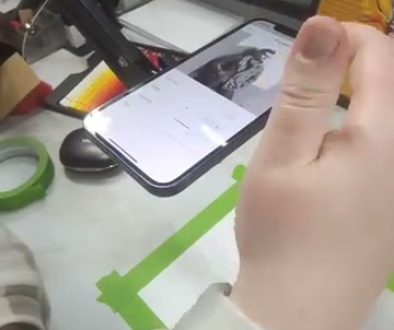
Da Vinci Eye uses your phone’s camera to create an augmented reality overlay. You see both your reference image and your paper at the same time, right through your screen. This means you can trace proportions accurately while still making all your own artistic choices about line quality, shading, and style.
In the video, you can see this technique in action. The artist uses the overlay to get the initial proportions of an eye drawing correct, then focuses on building up the details and shading. The tracing part gets the foundation right, but everything else comes from the artist’s own technique and observation.
You can adjust the opacity of your reference, resize it to fit your paper, and even lock the position so you’re not constantly readjusting. This gives you control over how much guidance you want at each stage of your drawing.
Building Your Skills Through All Three Methods
Here’s what I’ve learned from working with all three techniques: they’re not separate skills, they’re different angles on the same skill.

When you sketch quickly, you’re training your brain to identify the most important lines and shapes. This makes you faster at seeing what matters in a reference image.
When you trace, you’re studying exact proportions and relationships. You’re learning how far apart eyes actually sit on a face, or how the curve of a shoulder really looks. This visual information stays with you even when you’re not tracing.
When you draw from observation without aids, you’re testing everything you’ve learned. You’re pulling from that visual library you built through sketching and tracing.
The video shows this progression beautifully. The artist starts with the overlay to establish proportions, then zooms in to work on details like the iris texture and eyelashes. Those details aren’t traced, they’re observed and interpreted. The tracing just made sure everything was in the right place to begin with.
Practical Steps for Combining These Techniques
Here’s how I approach a new drawing project using all three methods together.
Start with quick sketches. Before I even think about tracing or detailed drawing, I do a few thumbnail sketches to figure out composition. Should the subject fill the page or have breathing room? What angle works best? These sketches take maybe five minutes total.
Use tracing for proportion foundation. Once I know my composition, I’ll use Da Vinci Eye to get the basic shapes and proportions down. I’m not tracing every detail, just the major landmarks that need to be accurate. For a portrait, that might be the placement of features. For an animal, it’s the body structure.
Switch to observation for details. After the foundation is set, I turn off the overlay and work from observation. This is where shading, texture, and all the artistic interpretation happens. The video demonstrates this perfectly around the 36 second mark, where you can see the artist working on shading techniques for the eye.
Sketch studies on the side. While working on a detailed piece, I keep a sketchbook nearby for quick studies of tricky areas. If I’m struggling with how the eyelid folds, I’ll do a few quick sketches to understand the form before adding it to my main drawing.
Common Mistakes When Learning to Draw Trace and Sketch
The biggest mistake I see is treating these as completely separate activities instead of tools that work together.
Some artists only sketch and never push toward finished work. Sketching is great for practice, but you also need to challenge yourself with complete drawings where you work through the difficult parts. That’s where real growth happens.
Others rely too heavily on tracing without building observational skills. Tracing should teach you something each time you use it. Pay attention to the proportions you’re following. Notice how shapes relate to each other. That awareness transfers to your freehand work.
Another common issue is being too precious with your drawings too early. The video shows loose, confident strokes even in the early stages. You can always refine later, but if you’re worried about every line being perfect from the start, you’ll never build fluidity in your work.
Don’t skip the planning stage. I used to jump straight into detailed drawing without thumbnails or composition sketches. I’d get halfway through and realize the proportions didn’t work for my paper size, or the composition felt cramped. Those few minutes of sketching first save hours of frustration later.
Developing Your Personal Style Through Practice
Here’s something that took me a while to understand: using tools like tracing doesn’t erase your personal style. If anything, it helps you develop it faster.
Your style comes from the choices you make. How you handle edges, whether your shading is smooth or textured, how much detail you include versus suggest. All of those decisions are still yours when you draw trace and sketch.
When you use Da Vinci Eye to trace proportions, you’re freeing up mental energy to focus on those stylistic choices. Instead of stressing about whether the eyes are too far apart, you can concentrate on how you want to render them.
The artist in the video has a clear personal style visible in the line work and shading approach. The tool helped with accuracy, but the artistry is all theirs. That’s how these techniques should work together.
Practice each method regularly. I try to do quick sketches daily, even if it’s just five or ten minutes. For larger projects, I’ll use tracing to establish proportions. And I make sure to do regular observational drawing without any aids to keep those skills sharp.
Start drawing with Da Vinci Eye