How Modern Drawing Technology Changed Portrait Art Forever
See Da Vinci Eye in action in the video below.
Portrait drawing has always been one of the most challenging subjects for artists to master. Getting the proportions right, capturing a likeness, understanding facial structure, these skills traditionally took years of dedicated practice and countless failed attempts.
But something shifted in the last few years. New technology using augmented reality has changed how artists approach realistic portrait drawing. What used to require extensive training and natural talent is now accessible to anyone with a smartphone and the willingness to practice.
How AR Technology Makes Portrait Drawing Accessible
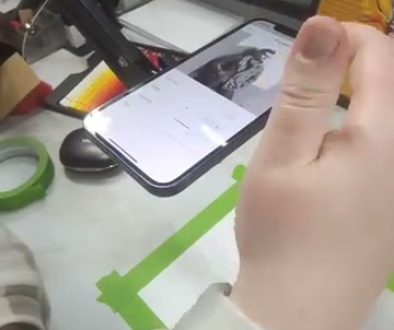
Augmented reality apps for drawing work by overlaying your reference image directly onto your drawing surface through your phone’s camera. You see both your paper and the reference image at the same time, letting you understand proportions and placement in real time.
This isn’t about replacing your skills. It’s about giving you a guide while you develop them. When you’re working on a portrait, the hardest part is often getting the initial placement right. Where does the eye sit in relation to the nose? How wide should the mouth be compared to the eyes?
Da Vinci Eye uses AR to help you answer these questions as you draw. You position your reference image over your paper, adjust the size to fit your workspace, and start drawing while seeing both layers together. The app becomes a learning tool that shows you correct proportions while your hand does the actual work.
The difference between this and traditional methods is immediacy. Instead of constantly measuring and rechecking, you can focus on observing details and building your drawing skills.
What Changed When Digital Tools Met Traditional Drawing
For centuries, master artists used tools to help them create accurate drawings. Camera obscuras, grids, tracing paper, these weren’t shortcuts. They were standard studio equipment that helped artists understand structure and proportion.
The shift happened when these tools became digital and portable. What used to require a dark room and specialized equipment now fits in your pocket. AR drawing apps brought professional techniques to everyday artists without the complexity.
This democratization means more people can create realistic portraits without years of academic training. A beginner can start seeing results in their first session. An intermediate artist can tackle more ambitious projects. Even experienced artists use these tools to save time on initial layouts.
The technology removes the barrier of “I can’t draw what I see.” Now you can see exactly where each element goes, and your job becomes training your hand to follow what your eye observes.
How Portrait Artists Actually Use AR Apps
The typical workflow starts with choosing your reference photo. Most artists use their phone for this since it’s the same device running the app. You select your image, then position your phone so you can see both your paper and the overlay.
From there, you adjust the size and placement of the reference to match your drawing surface. This flexibility lets you work at any scale. Want to draw a small portrait in your sketchbook? Adjust the overlay smaller. Working on a large canvas? Scale it up.
Once positioned, you can lock the reference in place and zoom into specific areas. This is where the real learning happens. You might zoom into an eye to study the exact curve of the eyelid, or focus on the shadow under the nose to understand its shape.
As you draw, you’re not just copying lines. You’re observing relationships between features, understanding how light creates form, and training your eye to see proportions accurately. These are the fundamental skills that improve your overall drawing ability.
Training Your Eye While Using Technology
Here’s what most people don’t realize about using AR drawing tools. They actually teach you to see better. When you use Da Vinci Eye to draw portraits, you start noticing details you would have missed otherwise.
You see that the space between the eyes is roughly one eye width. You notice that ears align with the eyebrows at the top and the nose at the bottom. You observe that shadows aren’t just dark areas, they have shape and structure.
This visual education happens naturally as you work. You’re not memorizing rules from a textbook. You’re discovering proportions through direct observation, which is how artists have always learned.
Over time, something interesting happens. You start internalizing these observations. Your hand becomes more confident. You need the reference overlay less for basic placement and more for refining details. Your personal style begins emerging because you understand the underlying structure.
Why Realistic Portraits Are More Achievable Now
Realistic portrait drawing used to have a high barrier to entry. You needed access to good instruction, time for extensive practice, and enough persistence to push through the frustrating early stages when nothing looked right.
AR technology lowers that barrier significantly. Your first portrait attempt can actually look like the person you’re drawing. This early success builds confidence, which keeps you practicing, which improves your skills faster.
The learning curve becomes less steep. Instead of spending months on basic proportion exercises, you can jump into actual portrait projects while learning those fundamentals through practical application.
This doesn’t mean the technology does the work for you. Your hand still makes every mark. Your eye still needs to observe accurately. Your artistic choices still determine the final result. The app just removes the guesswork from initial placement.
Artists at every level benefit from this. Beginners get their first successful portraits. Intermediate artists tackle more complex compositions. Advanced artists explore new styles or work more efficiently on commissioned pieces.
Common Mistakes When Starting With AR Drawing Apps
The biggest mistake new users make is not stabilizing their phone properly. If your camera moves, your reference overlay moves, and suddenly all your careful placement is off. Set up your phone on a stable surface or use a phone stand.
Another common issue is working too small. People hunch over tiny sketchbooks with their phone awkwardly positioned. Give yourself space. Use larger paper when you’re learning. It’s easier to see details and your hand has more room to move naturally.
Some artists also make the mistake of drawing too fast, trying to trace every line quickly without really observing. Slow down. Look at what you’re drawing. Understand the shapes and forms. The app is there to guide you, not to rush you.
Lighting matters more than you might think. If your drawing surface is poorly lit, you won’t be able to see the overlay clearly. Set up near a window or use a good desk lamp. You need to see both your reference and your actual marks.
Finally, don’t forget to zoom in for details. The app lets you get close to specific features. Use that function. It’s much easier to draw an accurate eye when you can study its structure up close rather than trying to work out details in a full face view.
Where Portrait Drawing Technology Goes From Here
We’re still in the early days of AR technology for artists. What exists now already changes how people learn to draw, but the tools keep getting better. Accuracy improves, features expand, and more artists discover these methods.
The real impact isn’t just about technology though. It’s about access. More people can create the kind of realistic portraits they’ve always wanted to draw. More artists can take on ambitious projects without years of traditional training first.
This doesn’t replace traditional art education. It complements it. The fundamentals still matter. Understanding light, shadow, form, and composition still separates good portraits from great ones. But now those fundamentals are easier to learn through direct practice rather than abstract exercises.
Portrait drawing will always require observation, patience, and practice. What’s changed is that the practice can be more focused and the learning can happen faster. The technology removes barriers without removing the artistry.
Start drawing with Da Vinci Eye