Why Artists Draw Things Multiple Times (And You Should Too)
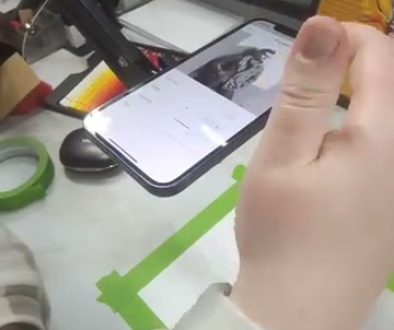
See Da Vinci Eye in action in the video below.
If you’ve ever watched an artist work in their sketchbook, you’ve probably noticed something interesting. They sketch the same flower from different angles. The same hand gesture five times on one page. The same building exterior rendered quickly, then slowly, then abstracted.
It’s not because they didn’t get it right the first time. It’s because sketching the same subject multiple times is one of the most powerful ways to improve your skills. When you repeat a subject, your brain starts to understand form, proportion, and detail in ways that a single drawing simply can’t teach you.
Your Brain Learns Through Repetition, Not Perfection
Here’s what happens when you sketch something just once. You’re focused on getting it done, on making it look right, on not messing up. Your hand is tense, your mind is racing, and you’re mostly worried about the final result.
But when you commit to sketching the same subject multiple times, something shifts. The second attempt feels easier because you already know what to expect. The third attempt lets you experiment because the pressure’s off.
By the fourth or fifth version, your hand knows the gesture. Your eye sees the proportions faster. You’re not just copying what’s in front of you anymore, you’re understanding it.
This is how artists develop visual memory. Repetition builds neural pathways that help you recognize shapes, angles, and relationships between forms. Eventually, you can render subjects from imagination because your brain has stored enough reference points.
Each Version Teaches You Something Different
When you sketch the same subject multiple times, you’re not creating identical copies. Each attempt reveals different information about what you’re observing.
Your first sketch might capture the overall shape. The second one helps you understand the proportions better. The third reveals details you completely missed before, like how that leaf curls at the edge or how the shadow falls at a specific angle.
I’ve found that using Da Vinci Eye for the initial sketches really speeds up this learning process. Instead of spending all your mental energy on measuring and placement, you can focus on observing the actual forms. It helps you train your eye to see shapes, shadows, and proportions more clearly while you practice.
Then, after a few guided attempts, you’ll notice something interesting. Your freehand drawings get better too. That’s because you’ve been building your understanding of the subject, not just copying it.
Different Approaches Build Different Skills
Here’s where repetition gets really interesting. Try rendering the same object in different ways, and you’ll develop a much broader skill set.
Sketch it quickly in two minutes, then spend thirty minutes on a detailed version. Draw it with simple lines, then render it with full shading. Create a realistic version, then simplify it into basic shapes.
Each approach works different muscles in your artistic brain. Quick sketches teach you to see the essential forms and make decisive marks. Detailed studies teach you patience and observation. Simplified versions teach you to understand underlying structure.
This variety is what builds versatility. You’re not just learning to render one thing one way. You’re learning to see and interpret your subject from multiple angles, with multiple techniques.
Small Subjects Work Best For Practice
You don’t need to paint a full portrait five times to benefit from repetition. In fact, smaller subjects often work better for this kind of practice because you can complete multiple versions in a single sitting.
A single leaf. A coffee cup. Your hand in different positions. A simple flower. These everyday objects are perfect for repetition practice because they’re accessible, manageable, and complex enough to keep teaching you new things.
There’s something special about working small too. It removes the intimidation factor. A tiny notebook with even tinier colored pencils can become your best learning tool because there’s no pressure. It’s just practice, just exploration, just learning.
When you keep your practice subjects simple and small, you can actually complete the repetitions. And completion matters. Five finished small drawings teach you more than one abandoned large painting.
Tracking Progress Through Repetition
One of the most motivating aspects of sketching the same subject repeatedly is seeing your improvement in real time. When you have several versions of the same subject, the progress becomes visible.
Keep your repeated drawings together. Don’t throw away the early attempts that didn’t turn out how you wanted. Those “failed” drawings are actually documentation of your learning process.
Look at your first attempt and your fifth attempt side by side. You’ll notice that shapes are more accurate, lines are more confident, and details are more refined. This visual proof of improvement is incredibly powerful for maintaining motivation.
It also helps you identify specific areas where you’re growing and areas that still need work. Maybe your proportions improved dramatically, but you’re still struggling with values. That’s useful information that guides your next practice session.
How To Build A Repetition Practice
Ready to start sketching the same subject multiple times? Here’s a practical approach that actually works.
Choose one simple subject. Set a timer for 5-10 minutes and sketch it once. Don’t overthink it, just draw. Then do it again immediately. Then again. Aim for at least three versions in one sitting.
For your first version, you might want to use Da Vinci Eye to understand the proportions and structure. It gives you the freedom to focus less on measuring and more on developing your technique. Once you’ve sketched with guidance, try the next versions freehand.
Change one variable each time. Different angle, different medium, different level of detail, different time limit. This keeps the practice interesting while still building your understanding of that specific subject.
Do this with one subject per week. By the end of the month, you’ll have explored four different objects in depth, with multiple sketches of each. That’s real progress.
Common Mistakes When Practicing Repeatedly
The biggest mistake people make with repetition practice is trying to make each version “better” than the last. This creates pressure and defeats the purpose.
Repetition isn’t about perfection, it’s about exploration. Some versions will turn out better than others, and that’s completely fine. The value is in the process, not in creating a masterpiece every time.
Another common mistake is choosing subjects that are too complex. If your subject takes an hour to sketch once, you’re not going to want to do it five times. Start simple. Master the simple forms before moving to complex ones.
Don’t skip the quick sketches either. Some artists only want to do detailed, finished drawings. But those rapid two minute sketches teach you things that slow, careful work can’t. They force you to identify what’s truly essential about your subject.
Finally, don’t compare your repetition practice to other people’s finished work. You’re looking at their final result, not their twenty practice attempts. Everyone sketches multiple times. The difference is that most people don’t share the practice work, only the final piece.
Start drawing with Da Vinci Eye